
Sermons
We live stream our service on YouTube each Sunday morning at 10:30AM, and add each new recording here weekly.
We live stream our service on YouTube each Sunday morning at 10:30AM, and add each new recording here weekly.

This miracle confronts each of us because it declares that we all need the forgiveness that only Jesus can give.

Jesus truly is the Son of God who holds power over the natural and the supernatural.

Not only is discipleship costly, but the call is urgent. Amidst many competing priorities “Follow Me” is a declaration that true discipleship is Jesus first, or Jesus not at all.

In Matthew 8:1–17, three portraits hang side by side—an outcast leper, an oppressor's servant, an overlooked mother—and each one shows us Jesus the redeemer and healer, moving with power, authority, and compassion.

At the close of the Sermon on the Mount in Matthew 7:28–29, the crowds are left astonished—not merely by what Jesus says, but by the authority with which he says it.

In Matthew 7:24-27, Jesus describes two ways to live, two kinds of builders—those who hear his words and put them into practice, and those who hear and do not. The difference between them is a foundation that is only revealed when the storm comes.

Modern life can be busy. In Luke 10:38-42, Jesus speaks with a busy woman and reminds her of the one necessary thing.
Jesus helps us recognize false prophets by identifying their fruit and Jesus warns us about self-deception. Do we really know Jesus and does he know us?
Matthew 7:12-14 gathers up everything Jesus has taught in the Sermon on the Mount into one rule, do to others what you'd want done to you, and one choice: which gate will you enter, and which road will you walk?

Jesus invites his people to ask, seek, and knock, promising that their Father in heaven delights to give good gifts to those who come to him.

In Matthew 7:1–6, Jesus does not call us to moral indifference or silence. Instead, he warns us against the danger of our critical hearts which condemn. Only when our spiritual blindness is addressed by Jesus can we turn from criticism to care, loving instead of judging.

The wonder of God's kingdom is that when we seek God's kingdom, we find that he meets our needs and will provide the grace we tomorrow and its troubles arrive.

We live in an age of anxiety. In Matthew 6:25–30, Jesus meets us in it not with a dismissal of our fears but with a command rooted in reality: do not be anxious about your life.

Matthew 6:11-15: In the second half of the Lord's Prayer, Jesus teaches us to bring our deepest needs to our Heavenly Father in three requests: give us, forgive us, deliver us.

In Matthew 6:19-24, Jesus challenges us to make God and his kingdom our ultimate concern. By so doing, we are set free from laying up earthy treasures to live lives of generosity in pursuit of treasure which truly lasts.

In a culture where food is almost always available and always visible, the thought of fasting can feel so foreign. Yet Jesus teaches us that those who faithfully practice this discipline will find great reward. However, the point of fasting is not to get more things from God, but to discover that God himself is our greatest reward.

Matthew 6:9-10 shows us that when Jesus teaches his people to pray, he begins not with our desires but with God's glory—that his name be hallowed, his kingdom come, and his will be done on earth as it is in heaven.

In Matthew 6:5-9 Jesus teaches his disciples how to pray — secretly and simply as sons and daughters.

The question that shapes every act of mercy is the question of audience: when we give, who are we really giving for?

In Matthew 5:38-48 Jesus teaches us how not to retaliate as the world retaliates and how to love in radically different ways from how the world loves.

Jesus calls his people to simple and honest speech flowing from the Holy Spirit's faithful work in our hearts.

Marriage is not a human construction but a creation ordinance — God's good gift, marked by unity, intimacy, and covenant permanence.

Scripture speaks about sex as God’s good gift to be enjoyed within marriage. In Matthew 5:27-30 Jesus warns against lust with our eyes, our heads, and our hearts.
Easter is a day to celebrate the truth that Jesus is risen indeed. But what difference does the resurrection make in our lives?

On Good Friday, through prayer, word, song, and the communion table, we will reflect on and rejoice in the death of the Lord Jesus, recognizing the great cost paid for us in His substitutionary death.

In the shadow of the cross, Mark 11 presents the moment where Jesus arrives in Jerusalem on a colt.

In Matthew 5:21-26 Jesus corrects the understanding about murder and anger. Jesus peels back the layers of anger and teaches Christians how they are to respond.
In Matthew 5:17–20, the religious teachers of Jesus’ day accused him of breaking and abusing God’s law, but Jesus makes clear that he came to fulfill and affirm the Scriptures.

In Matthew 5:13–16, Jesus makes a stunning declaration to an unlikely group — that they, and they alone, are the salt of the earth and the light of the world.

In Matthew 5:10-12, Jesus closes the Beatitudes by reminding His people that faithfulness to Him brings the hatred of the world, yet even this is a mark of belonging to His kingdom.

In the midst of the world’s longing for peace and well-being, Jesus declares the blessing of His kingdom, where citizens are marked by purity of heart and peacemaking.

In the fifth Beatitude from Matthew 5:7, Jesus teaches His disciples that mercy is a defining mark of those who belong to Him and a true blessing of life in God’s kingdom.

In James chapter 1, we discover that we can “count it all joy” even as troubles come. In Christ, we can embrace a new perspective that sees God’s sovereign goodness and love.

In the beatitudes Jesus provides a surprising portrait of life in God’s kingdom—an upside-down kingdom where true blessing is not found in strength, success, or self-sufficiency, but in spiritual poverty, godly sorrow over sin, and meek dependence on the Lord.

In Matthew 4:12–25, we see the beginning of Jesus’ public ministry as God’s light shines into a place of darkness and need. Jesus announces a kingdom of grace—calling people to repent, follow Him, and experience the glory of his life-giving kingdom. Matthew calls us to see the light of Christ, hear His gracious yet costly call, and respond with repentance and faith as we follow Him.

Where Adam, Israel, and each of us have failed, Jesus resists the devil’s temptations by trusting the Father, refusing shortcuts to provision, safety, and glory, and standing firm on God’s Word.

Like a royal herald announcing the entrance of coming monarch, John the Baptist prepares the way for Jesus’ arrival.

Matthew 3:1-12 introduces John the Baptist as he prepares the way for Jesus. John preached about repentance and how the call to surrender to Jesus was urgent.

Matthew 2:13–23 confronts the sobering reality that the birth of Jesus provoked not only worship but violent opposition, most clearly seen in King Herod’s fearful grasp for power.

In Matthew 2:3–6, we see a striking contrast between those who know the Scriptures and those who go to worship Christ.

Matthew 2 shows that the long-promised King has come, and the way people respond to Him reveals what they believe about Him.

This week, as we look at Matthew 1:18-25, we are brought back to the basics of our faith, remembering who Jesus is and why he came.

Matthew opens his Gospel by announcing a new beginning—a new “genesis”—centered on Jesus Christ, the Son of David and the Son of Abraham.

Throughout the New Testament, we hear the call to believe and be baptized. Baptism, commanded by the Lord Jesus, publicly and outwardly declares an inward spiritual reality.

In Matthew 24:36–51, Jesus teaches that no one knows the day or hour of his return—only the Father does—and therefore his followers must live knowingly, alertly, and faithfully.

This sermon calls the church to reflect the generous welcome of God shown to us in Christ.
The book of Jonah asks a demanding question: Is your heart like God’s heart?
In Jonah 4:1–4, Jonah’s anger exposes a heart resistant to God’s mercy. God’s compassion toward Nineveh should have led to worship, but instead it revealed Jonah’s pride and self-righteousness.

In both subtle and obvious ways, God’s people are often tempted to give their hearts and affections to things other than God.

In Jonah 3, we see the mercy of God at work as Jonah is recommissioned. Once a rebellious prophet, Jonah is given a second chance to obey, reminding us that God graciously uses weak and sinful people for His purposes.
Jonah 1:17–2:10 illuminates for us the nature of God’s sovereignty in life’s hardships and most challenging times.

This sermon from Jonah 1:8–16 contrasts Jonah’s empty claim to “fear the Lord” with the sailors’ genuine fear that leads them to trust and worship God.

This sermon from Jonah 1:4–8 reminds us that God is sovereign even in life’s fiercest storms.

In Jonah 1:1–3 we meet a prophet who receives God’s clear command but chooses to run the opposite direction.

In Colossians 2:6-7 Paul emphasizes that the Christian life begins by receiving Christ as Lord and continues by walking in Him.
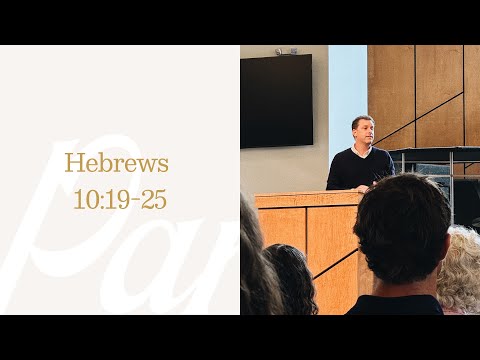
This sermon from Hebrews 10:19–25 reminds us that the church is more than just Sunday gatherings—it’s a hope-filled community God uses to draw us near to Himself and shape us into Christ’s likeness.

Jesus tells his disciples that he is the "True Vine" and that all who believe in him are his branches.

Written for the sabbath, Psalm 92 invites us to rest in God’s provision—joyfully giving thanks for His steadfast love in the morning and His faithfulness at night.

Where does mankind find the happy life, the blessed life? Psalm 1 serves as a gateway to two lives, to ways of living.

Creation silently testifies to the immeasurable greatness of God, and His law speaks of the perfection of His ways.

Though we are often tempted to put our trust in people of power and influence, Psalm 146 reminds believers that the Lord alone is worthy of praise.

The 23rd Psalm speaks to every facet of life from the perspective of those who call the Lord “my Shepherd.”
In a world that still suffers from sin, we look for love in all the wrong places and express it in all the wrong ways.
While church buildings are a blessing, they’re not our ultimate source of stability—God and His eternal Word are.

With God’s glory in view, Psalm 112 celebrates the beauty of a life shaped by a reverent love for God and a deep delight in his commandments. In doing so, our psalmist invites us into a life of gratitude and confidence as we reflect God’s grace, compassion, righteousness, and generosity in everything we do.

As we journey with David through his poetic, inspired confessional, God challenges us with a portrait of genuine repentance. May we, as with David so long ago, bring to God, the sacrifice of a broken and contrite heart.

Christians, on our earthly journey, face a dangerous enemy—the devil—who constantly opposes us. In the midst of his lies and accusations, we stand firm in the truth of Scripture, sustained by the grace and peace of the Lord Jesus.

Christians face many challenges on their journey as they follow Christ. The struggle as strangers in the world, with an enemy who opposes them and with the sin within them. How do we press on?

In his closing chapter, Peter discusses the character and culture of Christ’s church, beginning with its leadership. He addresses the calling of elders to serve as leaders who feed and lead God’s flock.

Our Heavenly Father uses suffering to refine us—revealing His deep love for us and exposing the misplaced loves in our own hearts.

How should Christians live today as they wait for Christ’s return? Peter declares that because we know how the story ends, we also know how to live in the present.

As he prepares to leave this world Jesus gives a wonderful message about the gift of the Holy Spirit and the gift of the Holy Scriptures.

Western culture views suffering as an obstacle to a good life. How then do we make sense of suffering in the Christian life?


Luke’s gospel records Jesus’ journey toward Jerusalem and his triumphal entry into the city.

Week by week, we turn to God’s word and hear the gospel proclaimed. When we come to the communion table, we see the gospel pictured.

Paul’s encouraging words in this passage from Romans 8 have continually brought assurance to believers that nothing—trouble, persecution, or even death—can separate us from the love of God.

In Psalm 73, Asaph shows us that we can bring all of our struggles to God for he is a great comforter.

Peter begins a difficult section with one of the clearest explanations of the nature and purpose of Christ’s suffering.

Psalm 150 is a call to worship, urging all creation to praise God with exuberance and joy.

The first recipients of Peter’s letter faced significant pressure and persecution. In the midst of such daunting circumstances, how would they live as a community, and how would they respond to their enemies?

How Christian husbands treat their wives speaks volumes to the watching world.

In six verses, Scripture speaks of the greater beauty that comes from knowing Jesus and living for Him.

Suffering can feel like an obstacle in our Christian journey and a detour on the way to our destination. Peter teaches us that this is not an obstacle but God’s call as we follow in Christ’s example.

How can Christians endure and bear fruit in the workplace? While our circumstances differ from those of the early Christians in 1 Peter, our source of hope and comfort remains the same.

What is the Christian’s attitude toward government? 1 Peter 2:13-17 teaches us that Christians are called to submit ourselves to human authorities as part of God’s good plan for the ordering of society.

How do Christians live as sojourners and exiles in the world? 1 Peter 2:11-12 teaches that the grace of God transforms both the worship of our hearts and the witness of our lives.

Christians have a complicated relationship with the world. They live in it, but they do not belong to it. How, then, should Christians live out their faith in a world that is not Christian?

In light of our study in 1 Peter, Matt McAlvey from Parkside Westside helps to illuminate how Jesus provides for us and pays our debt as demonstrated in a story of Jesus and Peter from the Gospel of Matthew.

Christmas is full of songs describing joy and holiday cheer. While the world sings for a few weeks do Christians have a joy that spans the whole year?

There are many mysteries surrounding Christmas, but the most significant is this: Is that really God in a manger? Wonderfully, we don’t have far to go for answers.

During the worst of times, the Old Testament prophets spoke of a future day when the mercy of God would shine through the darkness of Israel’s sin and suffering.

Although we face various challenges and difficulties in life, the apostle Paul reminds us that for those who are in Christ there is a future glory that outweighs all of it.

Everyone faces questions about identity and purpose: Who are you? Why are you here? Peter answers these by pointing to a living stone.

1 Peter 1:22-2:3 highlights how the gospel creates new people, with new loves and new appetites.

Fear is present in all our lives. Good fear protects us, anxious fear piles up, and bad fear paralyzes us. Where do fear and faith meet in the Christian life?

Popular false teaching led Paul to summarize the gospel in his letter to the Galatians—no one is justified by works of the law, but only through faith in Jesus Christ.

A disciple is a follower and learner of Jesus. Each Christian is called to take part in discipleship by helping others follow Jesus.

The ability to obey God’s commands flows out of the grace that God supplies. Because we have been saved by grace Christians are called to a new way of life: hope filled thinking and holy living.

It’s tempting to believe that life would be better if we lived in different circumstances. This is particularly true as we face trials and suffering.

Christians need hope during life’s trials. Pointing to the security of our hope in Jesus, Peter calls Christians to look back to the mercy of God and look forward to our heavenly inheritance.

This sermon explores the opening verses of 1 Peter, highlighting how Christians are both God's chosen people and strangers in the world.

Paul begins his letter to the Corinthians with a needed return to the basics. He reminds these Christians of the core message of the gospel—the power of the cross.

The wonder of God’s kingdom is that those who appear far off find the good news of God’s kingdom draws them near.